Introduction
The world of search is evolving rapidly, and GEO in Digital Marketing is becoming the next big strategy for online visibility. Traditional SEO focuses on ranking websites in search engine results, but GEO (Generative Engine Optimization) focuses on optimizing content for AI-powered search engines and generative platforms.
With the rise of AI tools like ChatGPT, AI search assistants, and generative search experiences, businesses must adapt their strategies. GEO in Digital Marketing ensures that your content is discoverable, trusted, and referenced by AI systems that generate answers for users.
In this blog, we will explore how GEO in Digital Marketing works, why it matters in 2026, and how businesses can optimize their content for the future of AI-driven search.
What is GEO in Digital Marketing?
Understanding GEO in Digital Marketing
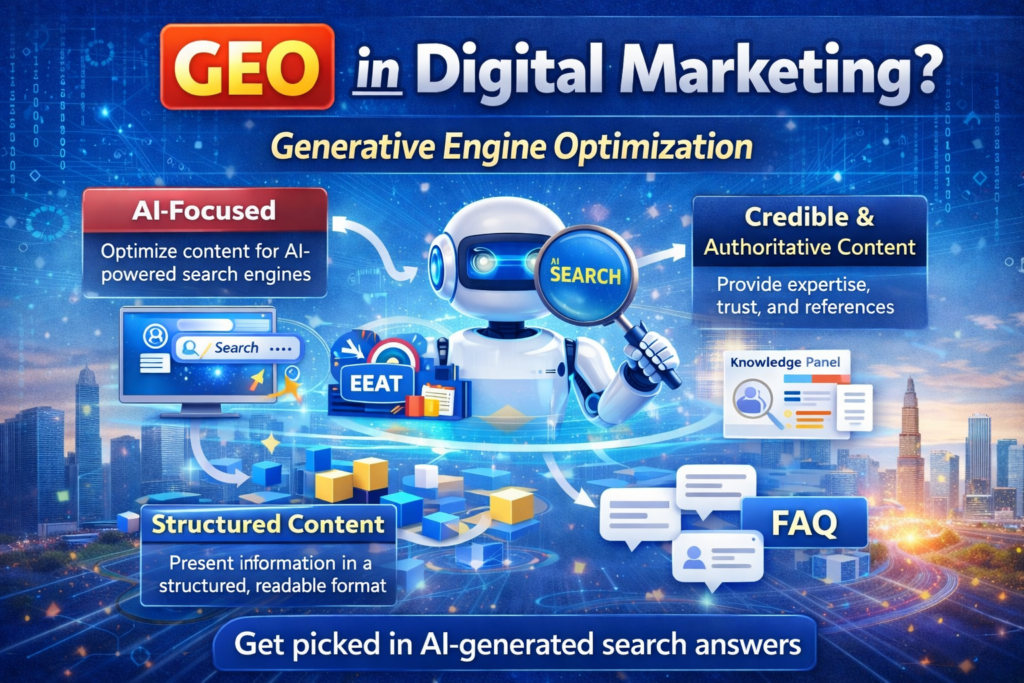
GEO in Digital Marketing stands for Generative Engine Optimization, a strategy designed to optimize content for AI-based search engines and generative AI tools.
Unlike traditional SEO, where websites compete for ranking positions, GEO in Digital Marketing focuses on making your content valuable enough for AI models to reference when generating answers.
This means your content should be:
Informative
Structured
Context-rich
Authoritative
When done correctly, GEO in Digital Marketing helps your brand appear in AI-generated responses.
Why GEO in Digital Marketing is Important in 2026
The Rise of AI Search
Search engines are evolving beyond traditional keyword searches. AI-powered systems now understand context, intent, and conversational queries.
This shift makes GEO in Digital Marketing essential for businesses that want to remain visible online.
Major changes include:
AI-generated search results
Conversational search queries
Voice search growth
AI-powered assistants
Because of these trends, GEO in Digital Marketing is becoming a key strategy for future digital marketing success.
How GEO in Digital Marketing Works
Content Optimization for AI
In GEO in Digital Marketing, content must be optimized for AI comprehension rather than just keyword ranking.
This means creating content that answers real user questions clearly and logically.
Important elements include:
Clear headings
Structured information
Expert insights
Reliable sources
High-quality content increases the chances that AI platforms will reference your website.
For example, educational platforms like
https://vidyasarthi.com/ provide structured information that AI systems can easily interpret and reference.
Key Strategies for GEO in Digital Marketing
Creating AI-Friendly Content
To succeed in GEO in Digital Marketing, content should be written in a way that AI engines can easily understand.
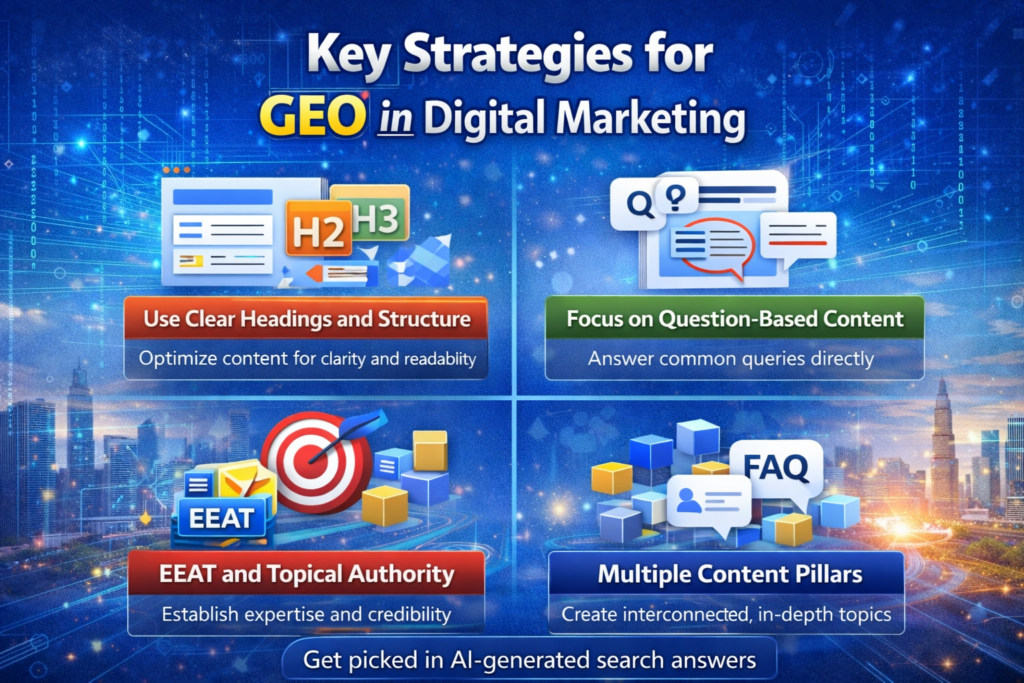
Use Clear Headings and Structure
Content with proper H2 and H3 headings helps AI models identify the main topics of the article.
Structured content increases visibility in AI-generated search results.
Focus on Question-Based Content
AI search engines often answer questions directly. Writing content that addresses common questions improves GEO performance.
Examples include:
What is GEO in Digital Marketing?
Why is GEO important for AI search?
How can businesses implement GEO strategies?
These types of queries improve the chances of appearing in AI-generated answers.
Build Topical Authority
Another important factor in GEO in Digital Marketing is authority.
Creating multiple pieces of content around the same topic builds expertise and credibility.
For example, websites like
https://vidyasarthi.com/ provide educational content that strengthens topical authority in the digital marketing space.
Difference Between SEO and GEO in Digital Marketing
Traditional SEO vs GEO Strategy
While SEO and GEO share similar goals, their approaches are different.
SEO Focus
Traditional SEO focuses on:
Search engine rankings
Backlinks
Keyword density
Search engine algorithms
GEO Focus
GEO in Digital Marketing focuses on:
AI-generated answers
Content credibility
Contextual relevance
Structured knowledge
Both strategies work together to increase online visibility.
Benefits of GEO in Digital Marketing
Higher Visibility in AI Search
One of the biggest advantages of GEO in Digital Marketing is appearing in AI-generated responses.
This increases brand exposure even if users do not click traditional search results.
Increased Authority and Trust
Content optimized for GEO in Digital Marketing often includes expert insights and reliable information.
This builds trust with both users and AI platforms.
Future-Proof Marketing Strategy
As AI search grows, businesses that adopt GEO in Digital Marketing early will gain a competitive advantage.
The digital marketing landscape in 2026 will strongly depend on AI search visibility.
How Businesses Can Start Using GEO in Digital Marketing
Create High-Quality Educational Content
Educational blog posts and guides are highly valuable for GEO in Digital Marketing.
AI systems prefer detailed and informative content that clearly answers user queries.
Build an Authoritative Website
Businesses should focus on creating websites that publish consistent and informative content.
Platforms like
https://vidyasarthi.com/ demonstrate how structured information and educational resources can help improve online authority.
Use Structured Content
Using headings, FAQs, summaries, and logical formatting improves the effectiveness of GEO in Digital Marketing.
Structured information helps AI models understand the context of your content.
Future of GEO in Digital Marketing
AI Will Change Search Behavior
The future of search will be more conversational and AI-driven. Instead of browsing multiple websites, users will rely on AI-generated answers.
Because of this shift, GEO in Digital Marketing will become an essential part of every digital marketing strategy.
Businesses that adapt early will benefit from increased visibility and brand authority.
Conclusion
The digital marketing landscape is evolving rapidly, and GEO in Digital Marketing represents the next stage of search optimization.
As AI-powered search engines continue to grow, businesses must create structured, authoritative, and informative content that AI systems can understand and reference.
By combining traditional SEO strategies with GEO in Digital Marketing, brands can secure long-term online visibility and remain competitive in the AI-driven search ecosystem of 2026.